Academy Journal
Insights for data learners
Short, practical reads from Digica mentors and cohorts — built around the skills you practice in our live programs.

Scope the Take-Home Before You Open the Notebook
Take-home assignments fail when candidates build a thesis instead of a bounded answer — clarify the question, time box, and ship one defensible thread.

Split by Time, Not by Luck
Random train/test splits look rigorous until your model meets next month’s data — temporal splits mirror how predictions actually get used.

When Your Average Hides the Real Story
One blended KPI can look healthy while two segments move in opposite directions — segmentation is how you avoid defending a number that misleads.
The SQL Pattern for “Who Didn’t Show Up?”
Stakeholders rarely ask who converted — they ask who vanished. Anti-joins answer that question without inflating your counts.
Write the Metric Definition Before You Build the Dashboard
Teams argue about “revenue” because nobody agreed on grain, filters, and ownership first. Definition first — charts second.
Pick the Metric That Matches the Cost of Being Wrong
Accuracy looks great in a notebook. Interviews and production ask whether you optimized for the mistake that actually hurts.
When Your Resume Still Says Something Else
Career switchers do not need a fake title — they need a consistent story: transferable judgment, sharp projects, and a clear target role.
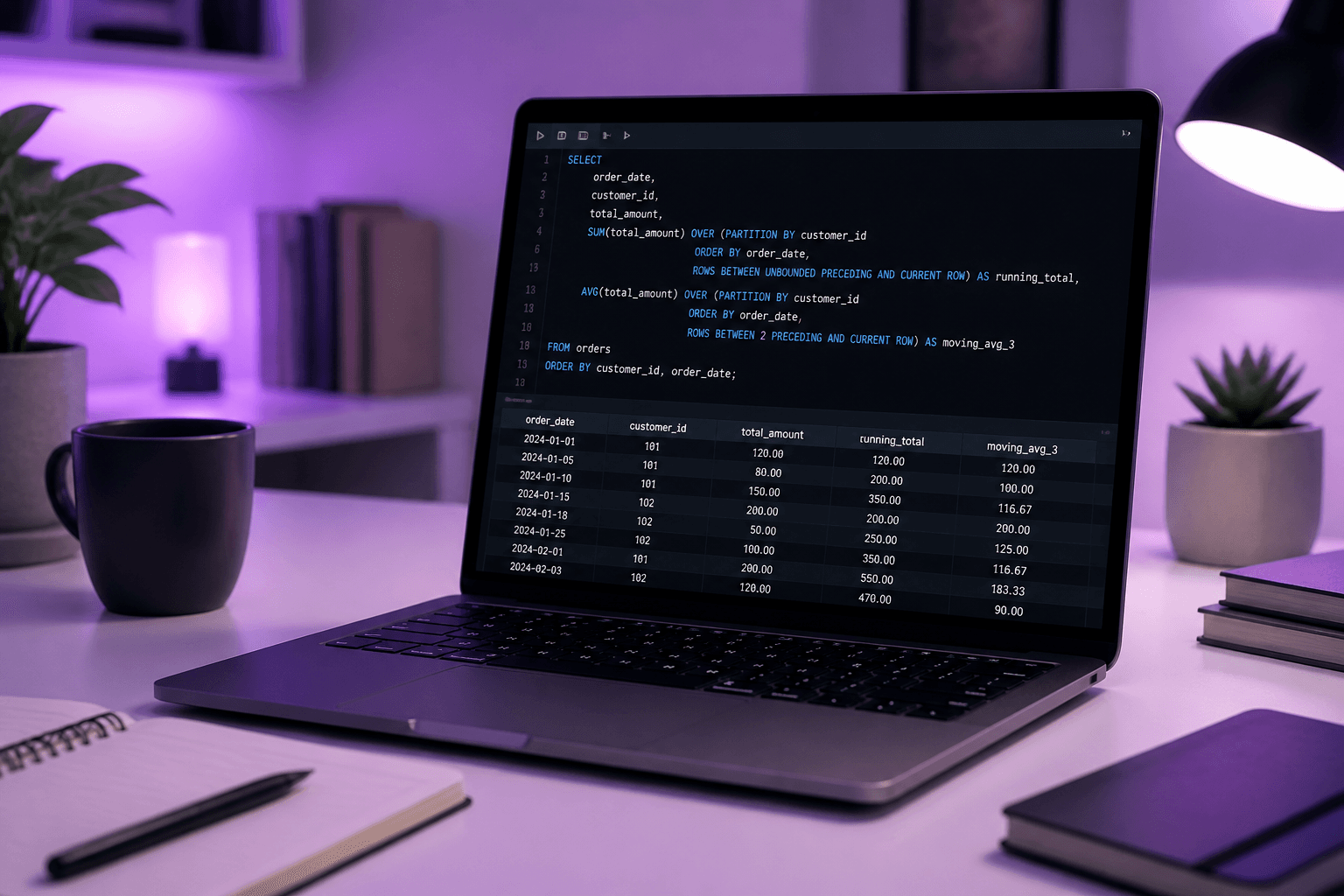
Window Functions That Actually Show Up in Interviews
RANK, LAG, and running totals — not as trivia, but as the moves analysts use when stakeholders ask “compared to last month?”
From Messy CSV to a Stakeholder-Ready Story
Cleaning is not the finish line. The win is a clear narrative: what changed, why it might have changed, and what to do next.
Why Your First ML Model Should Be Boring
Start with a baseline you can explain. Complexity without a clear lift is how portfolios confuse interviewers.